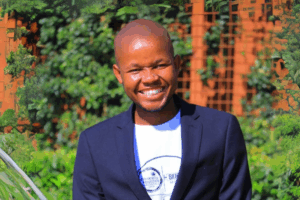
Jameson Makola is a dedicated advocate for justice, equality, and the protection of fundamental freedoms.
By Noko Mashilo
Jameson Makola is a dedicated advocate for justice, equality, and the protection of fundamental freedoms. With a deep commitment to upholding human dignity, this provincial chairperson of Law and Human Rights in Mpumalanga works tirelessly to ensure that every individual’s rights are respected, protected, and fulfilled.
Under the theme I Am Human, in alignment with Human Rights Month Makola, emphasises the universal nature of human rights—reminding us that beyond our differences, we all deserve fairness, dignity, and respect. The I Am Human campaign is primarily inspired by the desire to promote empathy, understanding, and recognition of shared
humanity.
“We focus on combating Stigma and discrimination against Key and other Priority Populations. We remind everyone that despite our differences, we are all fundamentally human beings and the constitution protects all of us against societal prejudice. It also highlights basic human rights and dignity,” said Makola.
Makola said they will be reviewing and developing the National Human Rights Plan for HIV, TB, and STIs on the 13 and 14 March 2025.
“We will launch the National Human Rights Defenders Awards on the 19th of March 2025. This will be followed by build-up activities in commemoration of the Human Rights Day on the 21st March 2025,” said Makola also represents the Provincial CSF as the Programme Review Convener and also the Executive Director of The Health, Law and Human Rights Centre-SA.
He further said this will reduce stigma and discrimination, and sensitise and train health and community workers. “It will also strengthen legal support services and reduce gender inequality and Gender-Based Violence,” said Makola.
Makola noted that people living with HIV, TB and STIs in Mpumalanga face human rights challenges such as stigma, discrimination, and lack of access to healthcare.
“They are shunned, gossiped about, or ostracised from social activities because of their status. Sometimes, they are treated differently from other patients, or denied treatment. They also face discrimination in the workplace,” said Makola
Makola mentioned that people have to wait a long time to see a healthcare provider.
“In most cases, there are shortages of medicine in some facilities and also poor infection control in places where TB is likely to spread,” said Makola.
When asked what role the Law and Human Rights Sector does in these challenges, Makola said they play a pivotal role in addressing human rights violations in healthcare settings and communities by promoting equity, non-discrimination, and access to health care.
“We use human rights law to protect patients and promote health, we empower patients to complain if they believe their rights have been violated. National Health Act requires health facilities to have an internal procedure for investigating complaints, protecting the rights of vulnerable and prejudiced groups, ensuring that health care is accessible to all, is free from discrimination, good quality and patients are treated with respect,” said Makola.
Makola said they work in gloves with the South African National AIDS Council (SANAC) which supports human rights in the fight against HIV and TB by reducing stigma and discrimination, and also strengthening legal and support services.
“Through its campaigns, SANAC works to reduce gender inequality and GBV. Its work is based on the principle that everyone has a moral and legal responsibility to act to protect the rights of people living with HIV and TB,” said Makola.
Makola said to strengthen human rights protections, policy changes and legal reforms, there must be an increase in funding for human rights organizations.
“This will enact stronger anti-discrimination laws, improve access to justice for marginalized groups, and establish independent oversight mechanisms to monitor human rights abuses. It will also incorporate robust human rights standards into existing laws across sectors like healthcare, policing, and employment; with a particular focus on addressing systemic inequalities based on race, gender, sexual
orientation, and socioeconomic status,” said Makola
He also said individuals and communities can hold institutions accountable for human rights violations by joining groups, contacting politicians, and using legal and non-judicial systems.
“They can start a local group that campaigns for human rights or support non-governmental organizations (NGOs) that work on human rights. This will give people more opportunities to participate in decisions that affect their rights and increase the ability of institutions to recognize and respect human rights,” he said.
Makola said they have observed positive changes in attitudes towards people living with HIV and TB since the start of I am Human campaign. “The campaigns have contributed to increased knowledge about the diseases, reduced stigma, and encouraged more open conversations about HIV and TB, leading to better treatment adherence and overall societal acceptance of those living with these conditions,” he said.
“If you are afraid to seek healthcare due to stigma or discrimination, speak to a trusted friend or family member, or join a support group, don’t let stigma stop you from getting help. Learn about HIV, TB and STI and share accurate information with others, treat others with respect and dignity, and show compassion for people infected and affected by HIV, TB and STI,” said Makola.